
Holidays in Spanish: Essential Vocabulary & Phrases for Celebrations
Holidays and celebrations are vibrant threads in the fabric of any culture, and learning how to talk about them in Spanish opens up a whole new world of cultural understanding and connection.
In Spanish, it’s helpful to distinguish between a public holiday (often a non-working day) and a general celebration or a vacation.
• Día festivo / Día feriado: Refers to a public holiday, usually recognized by law. For a definitive linguistic definition, you can consult the Royal Spanish Academy’s entry for festivo.
• Celebración / Fiesta: More general terms for a celebration or party.
• Vacaciones: Refers to a vacation or time off from work or school.
Common Holidays and Celebrations in Spanish
Ready to celebrate and discuss special dates in Spanish? Let’s dive into the essential vocabulary!
| English | Spanish | Notes |
|---|---|---|
| Holidays | Día festivo / Día feriado, Las fiestas | Día festivo/feriado is for public holidays; Las fiestas is for general festivities. |
| Public holiday | Día feriado | Usually a non-working day. |
| Birthday | Cumpleaños | – |
| Valentine’s Day | Día de San Valentín / Día de los Enamorados / Día del Amor y la Amistad | “Day of Love and Friendship” is common too. |
| Mother’s Day | Día de la Madre / Día de las Madres | – |
| Father’s Day | Día del Padre | – |
| Labor Day | Día del Trabajo / Día del Trabajador | – |
| Women’s Day | Día de la Mujer | – |
| Independence Day | Día de la Independencia | Specific date varies by country. |
| Black Friday | Viernes Negro | – |
| Teacher’s Day | Día del Maestro | – |
| April Fool’s Day | Día de los Inocentes | Celebrated on December 28th in some regions. |
| Carnival | Carnaval | Pre-Lent celebrations. |
| Spring Break | Vacaciones de primavera | – |
| Holy Week | Semana Santa | The week before Easter. |
| Easter | Pascua | – |
| Thanksgiving | Día de Acción de Gracias | Predominantly celebrated in the US. |
| St. Patrick’s Day | Día de San Patricio | – |
| Halloween | Halloween / Noche de Brujas | Víspera de Todos los Santos is rarely used informally. |
| Hanukkah | Janucá | – |
| Christmas Eve | Nochebuena | – |
| Christmas | Navidad | – |
| Christmas Season | Temporada Navideña | – |
| New Year’s Eve | Nochevieja | – |
| New Year’s Day | Día de Año Nuevo | – |
| Three Kings’ Day | Día de Reyes | Celebrated on January 6th. |
| Vacations | Vacaciones | Refers to time off from work/school. |
Using Holiday Vocabulary: Grammar Tips
When talking about holidays in Spanish, there are a few simple grammar rules that will make your sentences sound natural.
Using the Definite Article
When referring to a specific holiday, especially those that include the word “día” (day), you’ll almost always use the masculine singular definite article “el” before it, because “día” is a masculine noun.
- El Día del Trabajo es el viernes. – Labor Day is on Friday.
- El Día de las Madres es una fecha muy especial. – Mother’s Day is a very special date.
- El Día de Reyes es una tradición importante. – Three Kings’ Day is an important tradition.
However, for some major holidays that are proper nouns (like Navidad, Pascua, Semana Santa, Nochebuena, Nochevieja), you’ll often use the definite article “la” or no article at all. For a deeper dive into how these work, explore our guide on Definite Articles.
Using the Preposition En
To express that something occurs “on” or “during” a specific holiday, you typically use the preposition “en” (in/on/at).
- Nos vemos en Navidad. – I’ll see you on Christmas.
- ¿Qué haces en Halloween? – What are you doing on Halloween?
- Viajaremos en Semana Santa. – We will travel during Holy Week.
Wishing Happy Holidays and Special Occasions
The most common way to do this is with “¡Feliz…!” (Happy…!). You can also use “¡Felicidades!” (Congratulations!).
- ¡Feliz cumpleaños! – Happy birthday!
- ¡Feliz Día de la Mujer! – Happy Women’s Day!
- ¡Felices Fiestas! – Happy holidays! (General holiday season).
- ¡Feliz Navidad! – Merry Christmas!
- ¡Feliz Janucá! – Happy Hanukkah!
- ¡Feliz Día de Acción de Gracias! – Happy Thanksgiving!
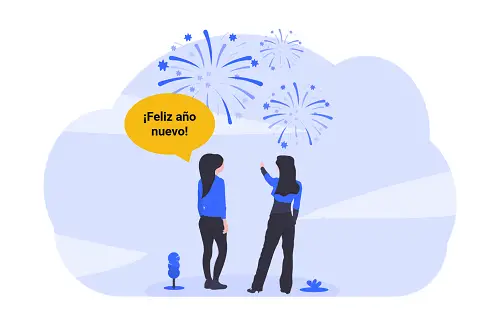
- ¡Feliz Año Nuevo! – Happy New Year!
- ¡Próspero Año Nuevo! – Prosperous New Year!
- ¡Feliz aniversario! – Happy anniversary!
- ¡Felicidades en tu cumpleaños! – Congratulations on your birthday!
Practice Quiz
Type your answer and click the button to verify.
1. How do you say “Happy Birthday”?
Check Answer
2. Translate: “Merry Christmas”
Check Answer
3. Article for “___ Día de Reyes”:
Check Answer
4. Spanish for “Vacation” (plural):
Check Answer
5. “See you on Christmas” -> “Nos vemos ___ Navidad”: