
Spanish Sentence Structure
Mastering Spanish Sentence Structure
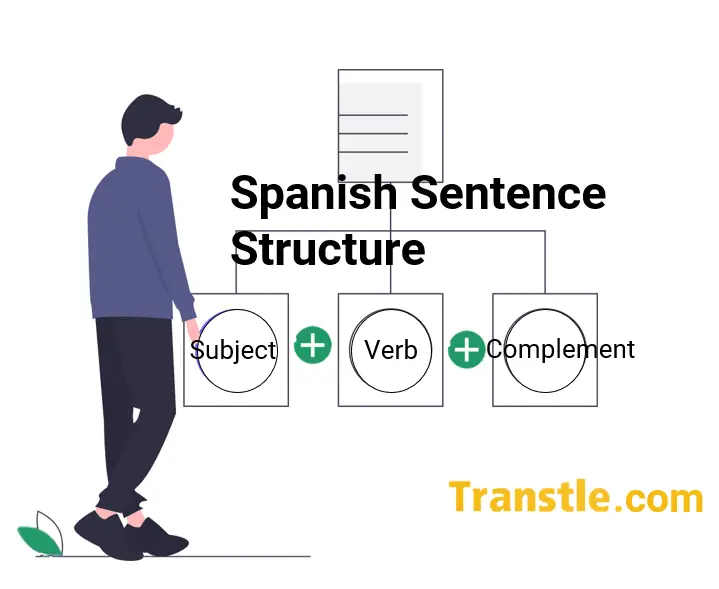
If you can build a sentence in English, you are already 70% of the way to speaking Spanish. The basic logic is the same: Subject + Verb + Complement. However, Spanish has its own “hidden rules”—like where to place the word “No” or how to change a statement into a question just by shifting your tone.
1. What is a Sentence? (The Foundation)
A sentence is a unit of words that expresses a complete sense. To communicate effectively, you must understand the parts of speech and these two essential elements:
The Subject: The person, animal, or thing performing the action (Who/What).
The Predicate: Everything said about the subject, centered around a Verb (The Action).
Examples in Action:
• The flowers (Subject) + grow every day (Predicate).
• Kangaroos (Subject) + jump high (Predicate).
2. Basic Sentence Structures in Spanish
A. Affirmative Sentences (The Standard)
In most cases, the word order is identical to English: Subject + Verb + Complement.
| Subject (Sujeto) | Verb (Verbo) | Complement | Full Sentence |
|---|---|---|---|
| Yo (I) | adoro | la comida italiana | Yo adoro la comida italiana. |
| Mi abuela | olvidó | las llaves de la casa | Mi abuela olvidó las llaves… |
| El jardín | se ve | fantástico | El jardín se ve fantástico. |
B. Negative Sentences
To say “no,” you simply place the word “No” before the verb.
Structure: Subject + No + Verb + Complement.
• Nicolas no entiende la información (Nicolas doesn’t understand…).
• Yo no sé lo que preguntas (I don’t know what you’re asking).
• La lluvia no para todavía (The rain doesn’t stop yet).
C. Interrogative Sentences (Questions)
In Spanish, you can turn a statement into a question using the same structure, but changing your tone.
Statement: Esteban está en tu casa.
Question: ¿Esteban está en tu casa? (Is Esteban at your house?).
3. The Golden Rule: Agreement (Gender & Number)
In Spanish, articles and adjectives must match the noun in both gender and number.
• Singular: La mujer sonríe (The woman smiles).
• Plural: Las mujeres sonríen (The women smile).
• Masculine: El niño juega (The boy plays).
• Masculine Plural: Los niños juegan (The boys play).
Summary

Quiz and Exercises
Practice the sentence structures you just learned. Type your answer in the box and click Check Answer to compare.
1. Identify the Subject, Verb, and Complement:
“Los niños juegan en el parque.”
Check Answer
CORRECT BREAKDOWN:
• Subject: Los niños (The children)
• Verb: juegan (play)
• Complement: en el parque (in the park)
2. Convert to Negative form:
“Ellas estudian mucho.”
Check Answer
CORRECT ANSWER:
• Ellas no estudian mucho.
(Just add “no” before the verb)
3. Convert to a Question (Interrogative):
“El libro es interesante.”
Check Answer
CORRECT ANSWER:
• ¿El libro es interesante?
(Remember to use both opening ¿ and closing ? marks)
4. Identify the Subject, Verb, and Complement:
“Ella lee una novela.”
Check Answer
CORRECT BREAKDOWN:
• Subject: Ella
• Verb: lee
• Complement: una novela
5. Convert to Negative form:
“Nosotros viajamos a España.”
Check Answer
CORRECT ANSWER:
• Nosotros no viajamos a España.