
Mastering French Sentence Structure: A Comprehensive Guide
In French, as in any language, a sentence (une phrase) constitutes a group of words systematically arranged to convey a complete message.
The structure of a sentence refers to the specific order of these words, which is essential for clear and coherent communication. Understanding this foundational structure is paramount for accurately expressing ideas in French.
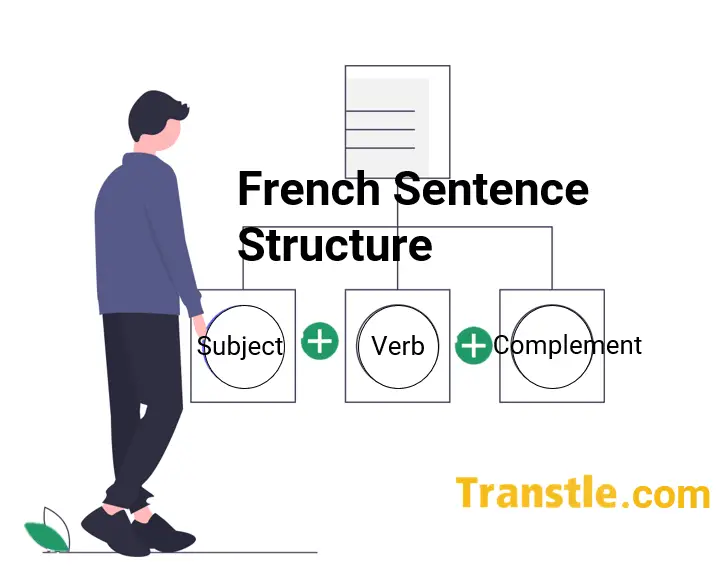
Core Elements of a French Sentence
All basic French sentences are built upon three fundamental components:
- The Subject: This is the person, animal, or thing that performs or experiences the action of the verb.
- Example: They want to go to the park. (Subject: “They”)
- The Verb: This element expresses the action, activity, movement, or state that the subject performs or undergoes.
- Examples: vivre (to live), marcher (to walk), exprimer (to express), manger (to eat), être (to be).
- The Complement: This part accompanies the verb, providing additional information or specifications such as time, place, manner, or the object of the action.
- Example: I put the book in my bag. (Complement: “in my bag”)
The fundamental arrangement for the most basic sentence is Subject + Verb + Complement.
This foundational structure serves as the basis for building more complex sentences by incorporating modifiers, adjectives, adverbs, and other grammatical elements to express precise meanings and nuances.
Types of French Sentences and Their Formation
French sentences can be primarily classified into three main types: Affirmative, Interrogative (questions), and Negative.
1. Affirmative Sentences
The affirmative sentence, the most straightforward type, consistently follows the fundamental structure:
Subject + Verb + Complement
Examples:
- J’aime le riz. – I love rice.
- Mon frère a fermé la porte. – My brother has closed the door.
- L’air est fort. – The air is strong.
2. Interrogative Sentences (Questions)
Interrogative sentences are used to ask questions. French offers several distinct methods for structuring them, varying in formality.
a. Question with Intonation (Informal): This method maintains the same affirmative sentence structure but is distinguished by a rising tone of voice and a question mark in writing.
Subject + Verb + Complement (?)
- Tu viens demain à Paris? – Are you coming to Paris tomorrow?
- Pedro et Julia visitent la ville cette semaine? – Will Pedro and Julia visit the city this week?
- Il est ici? – Is he here?
b. Questions with “Est-ce que” (Common & Neutral): This is a very common way to form a question. You simply prepend “est-ce que” to an affirmative sentence.
Est-ce que + Subject + Verb + Complement (?)
- Est-ce que tu viens demain à Paris? – Are you coming to Paris tomorrow?
- Est-ce que Pedro et Julia visitent la ville cette semaine? – Will Pedro and Julia visit the city this week?
- Est-ce que il est ici? – Is he here?
c. Inverting the Subject and the Verb (Formal): This method involves inverting the order of the verb and the subject, connected by a hyphen.
Verb – Subject + Complement (?)
- Viens-tu demain à Paris? – Are you coming to Paris tomorrow?
- Visitent-ils la ville cette semaine? – Will they visit the city this week?
- Est-il ici? – Is he here?
3. Negative Sentences
Negative sentences are formed by enclosing the verb with two particles: “ne” and “pas.”
Subject + ne + Verb + pas + Complement.
Key Points:
- Placement: “Ne” typically comes before the conjugated verb, and “pas” comes after it.
- Contraction: If the verb begins with a vowel or a silent ‘h’, “ne” contracts to “n’.”
- Informal Usage: In spoken French, it is very common to omit the particle “ne.”
Examples:
- Je ne veux pas rester ici. – I don’t want to stay here.
- Je ne sais pas. – I don’t know.
- Ils ne veulent pas courir. – They don’t want to run.
- Elle n’est pas en retard. – She is not late.
Agreement in Gender and Number
A crucial aspect of French sentence construction is agreement in gender and number. If a noun within the sentence is accompanied by an article and/or an adjective, these accompanying words must agree with the noun’s gender and number.
Examples:
- La fille dort. – The girl sleeps.
- Les filles dorment. – The girls sleep.
- Le garçon lit. – The boy reads.
- Les garçons lisent. – The boys read.
Summary
Quiz and exercises
Part 1.
- What is the basic structure of an affirmative sentence in French?
- How do you form a question in French using “est-ce que”?
- What is the structure of a negative sentence in French?
- Inverting the subject and verb is another way to form questions in French. True or False?
- What is the purpose of the word “ne” in a negative sentence in French?
Part 2.
- Transform the following sentence into a question using “est-ce que”: “Tu parles français.”
- Turn the following sentence into a negative sentence: “Je suis heureux.”
- Invert the subject and verb to form a question: “Tu aimes les croissants.”
- Write an affirmative sentence using the following subject, verb, and complement: “Elle / écouter / de la musique.”
- Turn the following sentence into a negative sentence: “Nous allons au parc.”
- Form a question using the following subject, verb, and complement: “Vous / aimer / le chocolat.”