
Haber vs Tener: The Ultimate Guide to Spanish ‘To Have’
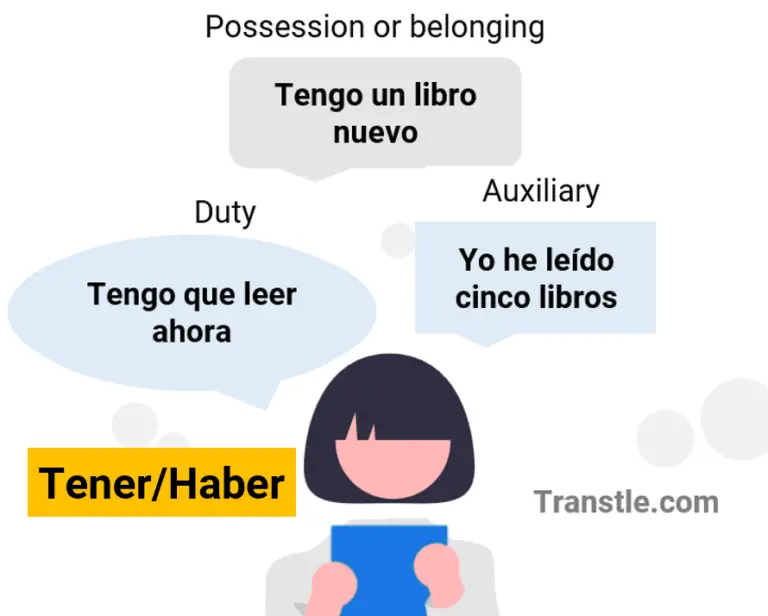
Haber vs. Tener: How to Use the Two Versions of “To Have”
In English, “have” does everything. In Spanish, we split that job between two powerful verbs: Tener and Haber. Understanding the difference is a major milestone in your Spanish journey.
1. The Core Difference: Possession vs. Helper
Think of them as two different tools:
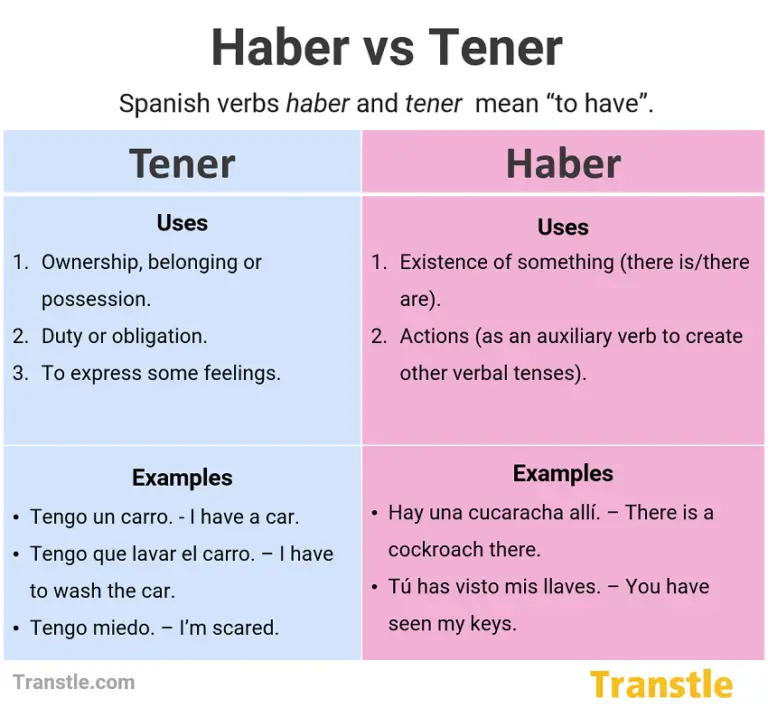
Tener: Used for possession (things you own), feelings/states, and obligations (duty).
Haber: Used as an auxiliary verb (a helper) to form compound tenses like “I have eaten”.
Note: Both are verbs. Even though they translate to “To have,” they serve very different purposes and are never interchangeable.
2. Present Tense Conjugation Chart
| Pronoun | Tener (Possession) | Haber (Auxiliary) | English |
|---|---|---|---|
| Yo | Tengo | He | I have |
| Tú | Tienes | Has | You have |
| Él / Ella | Tiene | Ha | He / She has |
| Nosotros/as | Tenemos | Hemos | We have |
| Ustedes | Tienen | Han | You (Plural) have |
| Ellos / Ellas | Tienen | Han | They have |
3. How to Use “Tener” (Belonging, Feelings & Duty)
A. Belonging / Possession
Structure: Subject + Tener + Object.
• Tú tienes un libro — You have a book.
• Yo tengo un hermano — I have a brother.
• Ellos tienen una casa grande — They have a big house.
• El gato tiene ojos verdes — The cat has green eyes.
• No tengo hijos — I don’t have children.
B. Feelings or States
• Tengo miedo — I’m scared.
• Ellos tienen frío — They are cold.
• Tenemos hambre — We are hungry.
• Tengo un dolor de cabeza — I have a headache.
• ¿Tienes un lápiz? — Do you have a pencil?
C. Duty or Obligation
Structure: Subject + que + Verb.
• Tengo que comprar un pastel — I have to buy a cake.
• Tengo que ir a la escuela — I have to go to school.
• Ellos tienen que ir a clases — They have to go to class.
• Tengo que irme — I have to go.
• Tienes que pensar antes de hablar — You have to think before you speak.
• Ella tiene que dirigir su compañía — She has to manage her company.
• Tenemos tarea que hacer — We have homework to do.
4. How to Use “Haber” (The “Helper”)
Haber is a bridge. It doesn’t stand alone to show possession; it is almost always followed by another verb in the Past Participle.
Examples of Haber + Participle:
• Yo he comido — I have eaten.
• Has visto la revista — You have seen the magazine.
• No he llegado a casa — I haven’t arrived home.
• Ellos han tocado el perro — They have touched the dog.
• Ella ha leído un libro — She has read a book.
• El árbol se ha caído — The tree has fallen down.
5. Using them in the Past (Tenía vs. Había)
| Pronoun | Tenía (Possession) | Había (Auxiliary) |
|---|---|---|
| Yo | Tenía | Había |
| Tú | Tenías | Habías |
| Ella | Tenía | Había |
| Nosotros | Teníamos | Habíamos |
Possession: Ella tenía una computadora moderna.
• Possession: Lorenzo tenía un jardín hermoso.
• Duty: Yo tenía que comprar un pastel.
• Duty: Ellos tenían que hacer todo rápido.
• Auxiliary: Yo había comido antes de salir.
• Auxiliary: Yo había visto algo así.
• Auxiliary: Él había conseguido un apartamento perfecto.
Quiz: Haber vs Tener
Complete the sentences by typing the correct form:
1. Yo hambre. (I am hungry)
Show Answer
Correct: tengo
2. Tú un perro. (You have a dog)
Show Answer
Correct: tienes